La Digue by Bike: The Gate Fee, the Tide, and Why Anse Source d’Argent Disappoints People
Updated September 26, 2026 · 8 min read
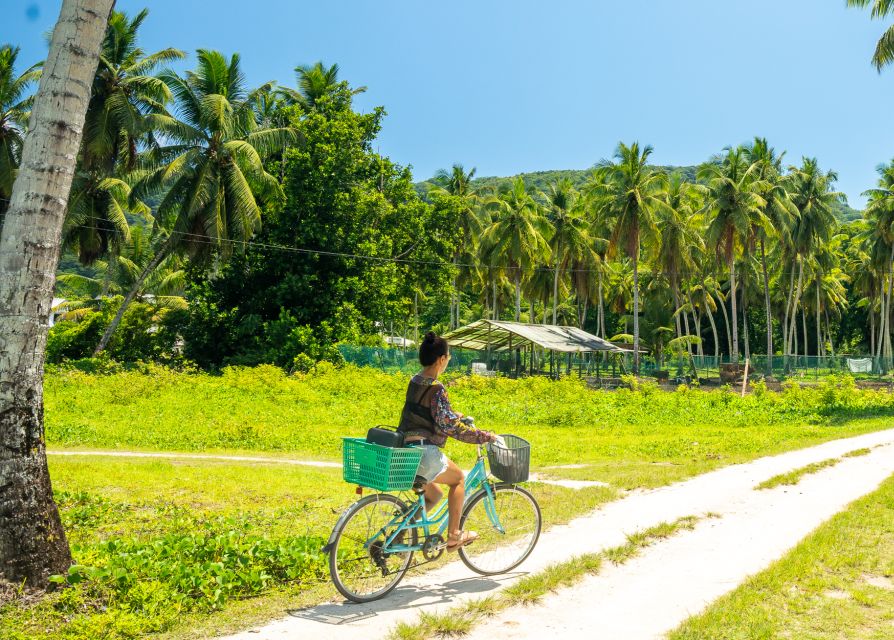
La Digue is the island people come to the Seychelles for and then get slightly wrong. The pictures are all of one beach. The island itself is the better part of the day, and it works on bicycles for a reason that is easy to miss: there is almost nothing else.
Petrol motorbikes and scooters are not permitted on the island at all. A handful of private cars exist, and most of the cars and buses that do run belong to hotels. What is left is bikes, ox carts for luggage, your own legs and a flat coast road. That is not a marketing angle, it is the traffic situation, and it is why a day here feels different from a day on Mahé.
Getting the bike
Bike hire is concentrated around the port at La Passe, where the ferry arrives – eight licensed rental businesses operate on the island, most of them right there, and most guesthouses also rent to their guests. You do not need to book ahead in normal weeks.
One piece of advice that sounds obvious and gets skipped: confirm the price before you ride off. Rates depend on how many days you take, and the difference between a one-day and a three-day rate is not posted on a board. Ask, agree, then go.
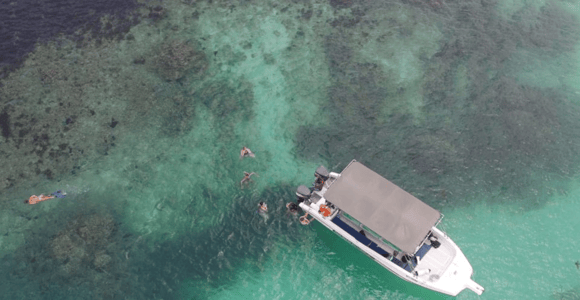
If you are arriving on a boat trip rather than under your own steam, the bike is usually part of the package. The La Digue Boat Trip with Bike Rental from Mahé is €153 for eight hours, 4.6 stars from 302 reviews, and includes both the crossing and the bicycle.
But read the next paragraph before you book that one.
If you are on Praslin, do not book the Mahé version
The same day, run from Praslin instead, is the La Digue Boat Trip with Bike Rental from Praslin: €100 for eight hours, 4.8 stars from 104 reviews. Cheaper, better rated, same island, same eight hours – and far less of that time spent on a boat, because Praslin is the neighbouring island rather than an hour and three quarters away.
There is also a taxi-boat transfer with a free bicycle at €120 for seven hours, 4.8 stars, though from a much smaller sample of 18 reviews.
The two-island trips out of Mahé show the same pattern: the same day costs more and rates lower the longer the transfer it drags along. Where you sleep decides what a day out is worth.
The gate at L’Union Estate
This is the detail that surprises people, and it is worth getting right because it involves money and a closing time.
Anse Source d’Argent is behind a gate. To reach it you cross L’Union Estate, a working former coconut and vanilla plantation, and the estate charges SCR 150 for foreign nationals. The estate is open every day from 6am to 6pm, and the pass is valid for one day – with one quirk worth knowing: buy it after 4.30pm and it is valid for the next day instead.
There is a reduced rate for visitors staying more than five days, which is worth asking about at the gate if La Digue is your base rather than a day out.
Inside the estate, on the way through, are the copra mill, the vanilla plantation, a tortoise enclosure and the old plantation house. Most people ride straight past them towards the beach. They are five minutes each and you have already paid for them.
The tide decides whether you can swim
Here is the thing nobody puts in the caption under the famous photograph.
Anse Source d’Argent sits behind a reef in very shallow water. At low tide, much of the bay is ankle to knee deep. The pools between the granite boulders hold water and are lovely to sit in, but they are wading pools, not swimming. At high tide the lagoon fills, the deeper pools reach a swimmable depth, and the water stays calm because the reef takes the swell.
So the beach delivers two completely different experiences depending on an hour of the day, and the entrance gate does not warn you which one you are about to buy.
Two practical consequences:
- If you want to swim, look up a tide table for La Digue and aim for a high tide. This matters more here than at any other beach in the country.
- If you want the photographs, go early. Before about 10am the beach is close to empty, and in the last couple of hours before sunset the low light on the granite is the reason the place is famous. The middle of the day is both crowded and flatly lit.
What else to ride to
The coast road is flat as far as the south of the island, and then it is not. A bike gets you comfortably to Anse Union and the estate, to the village at La Passe and along the east coast. Going further south towards Grand Anse means a climb, and it is a real one in the heat – plenty of people push the bike over the top and are perfectly happy about it.
The reward is that Grand Anse, Petite Anse and Anse Cocos are nothing like the lagoon at Source d’Argent. They face the open ocean. Currents there can be strong, and swimming is not always sensible; look at the water before you decide, and take local advice rather than a blog’s.
Doing it with children
La Digue with children is genuinely easy in one respect and hard in another. Easy: no traffic, flat roads, short distances, and bikes with child seats are available at La Passe. Hard: there is no shade on the coast road, the sun is directly overhead at midday, and a child who has had enough is a child you now have to get back to the jetty.
Plan the morning, not the whole day. And pay the estate fee early rather than at 4pm, when the pass will be valid for a tomorrow you may not have.
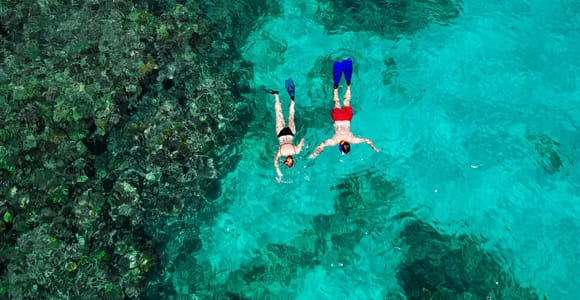
The full set of crossings and combinations is on the island hopping page, 35 listings from €46.53. If a whole day of pedalling is not the plan, the Praslin and La Digue day trips cover the island from a boat, and the most-reviewed snorkelling in the country is a short hop away from the same jetty.