When to Go to the Seychelles: Two Winds, and What They Do to Your Week
8 min read
For a holiday built around boat trips and snorkelling, April is a useful first choice; October and November are alternatives as the winds ease. These are climate tendencies, not a promise of calm seas. July is generally drier but the south-east trades can make crossings rough; August is the peak of those winds.
The Seychelles Meteorological Authority’s monthly guide is the basis for this comparison. It describes wetter and drier seasons, with rain possible in both. Check the local marine forecast before a crossing or swimming day rather than treating a month as a safety guarantee.
The two wind seasons
From May the south-east trades build. June becomes windier, July is generally cool and dry, and August brings the peak winds and rough seas. September’s winds weaken but remain fairly strong. Late September therefore should not be sold as reliably calm.
The north-west monsoon dominates the wetter part of the year. January is the peak rainy period; February can vary considerably, and rain decreases through March. Sunny intervals are possible in the wet season, but neither a dry day nor a short shower is guaranteed.
April is a transition with light, variable winds and potentially uncomfortable heat. In October the winds weaken substantially; November can offer pleasant sea conditions as the winds shift, while rainfall increases. Choose between these months according to your tolerance for heat and rain as well as your boat plans.
Choosing a beach
The weather service describes west- and north-west-facing beaches as more sheltered during the south-east trades, particularly June to September. South- and south-east-facing shores can have rougher water and more washed-up seaweed. This is a general coastal pattern, not a guarantee for a particular bay.
Choose the beach on the day using local warnings, wind, waves and currents. Do not infer safe swimming from a sheltered-looking location or book accommodation on the promise that its beach will always be calm and seaweed-free.
Planning a snorkelling trip
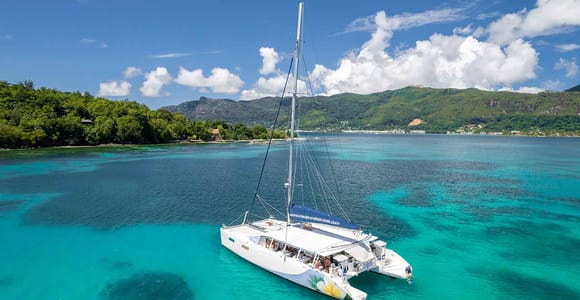
Calmer wind conditions can make a boat outing more comfortable, but visibility and the chosen reef depend on the day. The Sister, Coco and Félicité catamaran is a six- to eight-hour option from Praslin or La Digue, from €142 per person, rated 4.7 from 177 reviews. Its description allows snorkelling at Coco, Félicité or both, rather than guaranteeing both stops.
The inclusions list Sister and Coco landing fees, barbecue lunch, water, snorkelling equipment, return ferry tickets and return transfers for Praslin guests. La Digue guests arrange their own land transfers. Guiding is English/French; children under two, pregnant travellers and people with mobility impairments are excluded. Confirm the departure option, route and sea conditions before booking.
Wildlife does not follow a booking calendar
Choose a wildlife visit for the habitat and conservation work, not a guaranteed encounter. Ask the relevant reserve or operator about current nesting activity, access restrictions and suitable dates. Keep your distance and follow guides’ instructions; a seasonal expectation does not justify approaching animals or entering a restricted beach.
Cyclones and cancellations
The weather service says cyclones rarely affect the main granitic islands directly, but storms farther south can still affect conditions. That is not immunity from severe weather or cancelled crossings. Leave spare days for boat outings and follow operator decisions and current warnings; do not assume any cancellation will last only one day.
Prices and availability
Compare accommodation and transport for your actual dates. A price shown today does not establish that it stays constant throughout the year, and a quieter month does not guarantee a lower overall bill. Check cancellation terms on each booking before committing to connections.
Our recommendation
Start with April for a boat-focused holiday, or consider October–November if you can accept increasing rain. In July and August, plan for windier crossings and choose sheltered alternatives according to the forecast. Schedule important boat days early in your stay so there is room to rearrange them, without assuming that a sheltered marine park will always operate.